Bayerische Seenschifffahrt GmbH operates passenger shipping services on the Upper Bavarian lakes Königssee, Tegernsee, Starnberger See, and Ammersee. With over 30 ships and around 190 employees, Seenschifffahrt is one of the largest inland shipping companies in Germany. A total of around 1.5 million passengers are transported annually.
The state-owned lake shipping company was privatized on January 1, 1997. This marked the birth of Bayerische Seenschifffahrt GmbH. The GmbH was formed as a result of the privatization of the state-owned lake shipping company. The company is still wholly owned by the Free State of Bavaria.
The company's headquarters:
Seestraße 55, 83471 Schönau am Königssee
Managing Director:
Mr. Michael Grießer, graduate in business administration (FH)
Authorized signatory:
Mr. Marcus Weisbecker, graduate in business administration (FH)
Schifffahrt Königssee
Today
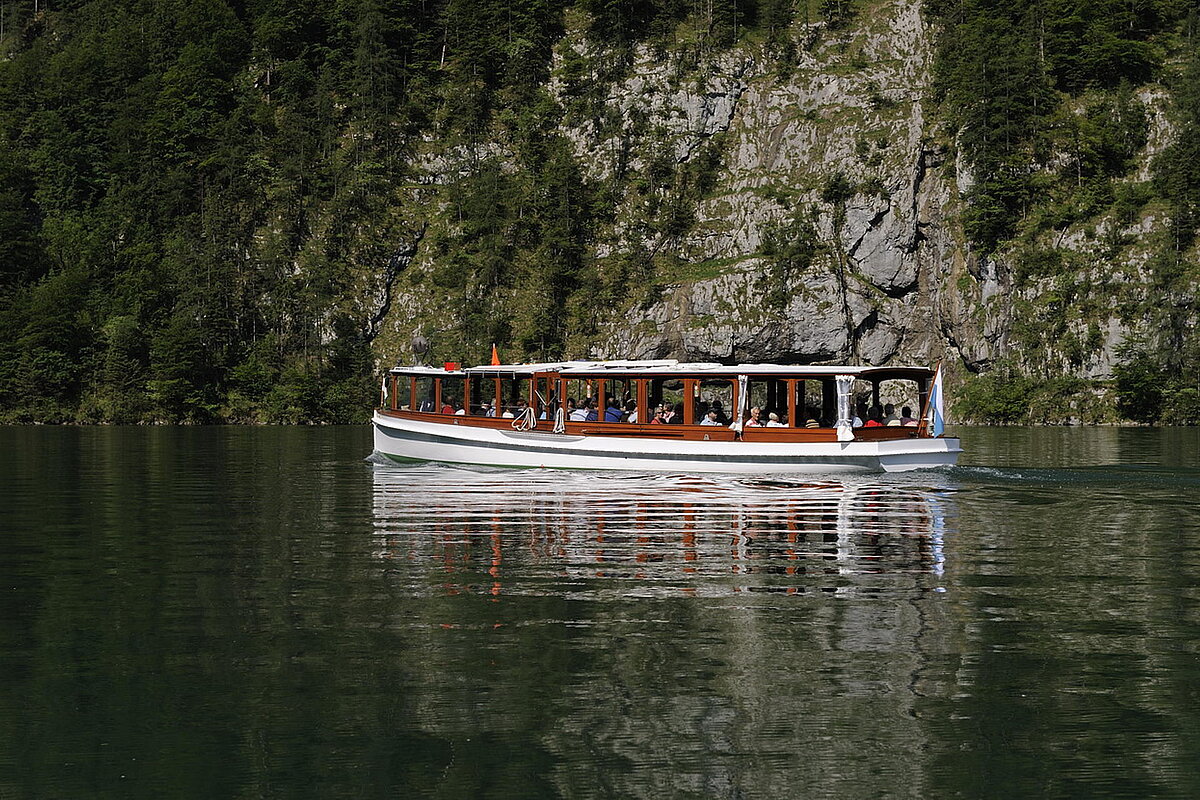
The division with the highest turnover employs around 90 people. All 19 passenger boats have been powered by electricity since 1909. The electricity for this comes from batteries in the hull of the boat. To ensure that the boats can be used for a whole day, the batteries have to be charged overnight. During the winter months, the employees in the transport service work in their trained professions as boat builders, carpenters, joiners, painters, electricians or locksmiths. This is when the boats are repaired or rebuilt. The mostly wooden-built boats and the 16 huts covered with wooden shingles require a high amount of financial support and personnel maintenance. However, we gladly do so to retain the characteristics and charm of this lake, located in the National Park.
Boat service on Lake Königssee is available year-round.
Technical Director: Michael Brandner
Yesterday
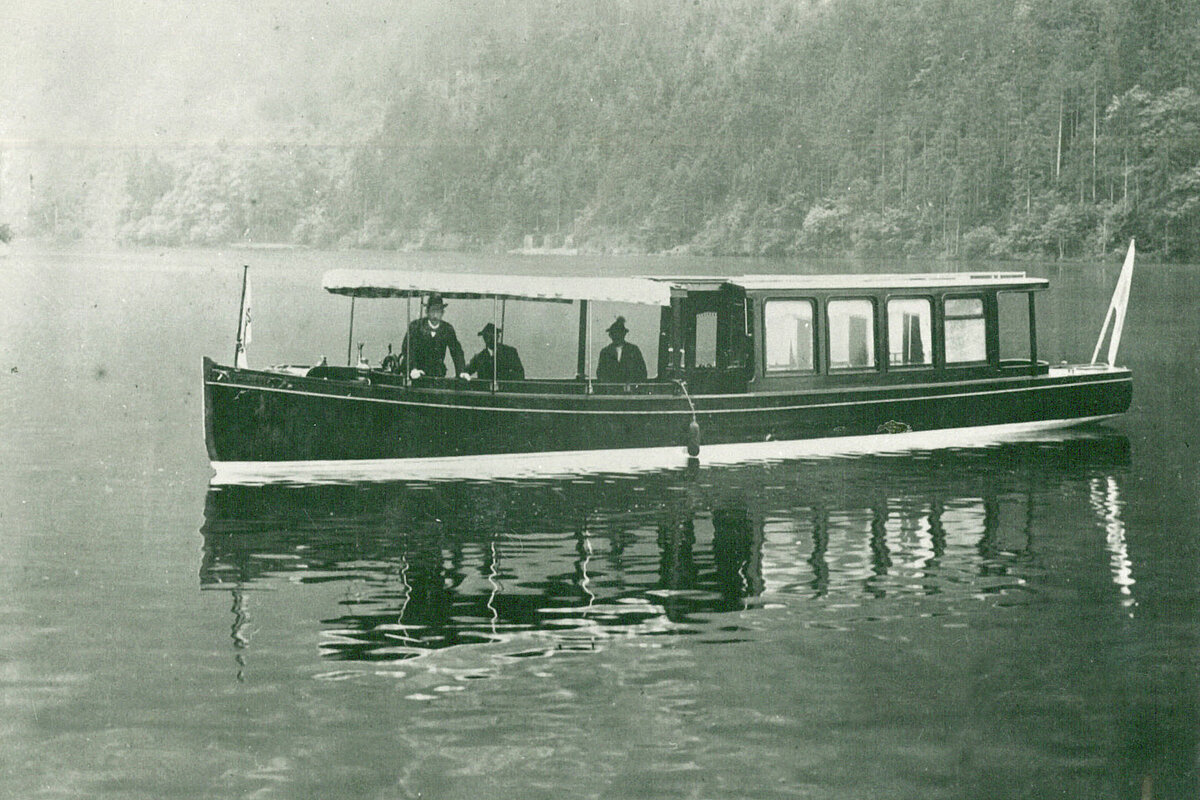
Just 12 years after the Augustinian monastery was founded in Berchtesgaden, the provost had the first church built on the peninsula in front of the east face of the Watzmann in 1134. The ecclesiastical principality, which remained independent for around 700 years, was incorporated into the Kingdom of Bavaria in 1810. The area around Königssee became the centerpiece of the royal hunting grounds. The summer residence of the prince-provosts in St. Bartholomä became the hunting lodge of the Bavarian kings. Until the start of motorized boats on the lake, rowing boats were the only means of transport. Large flat-bottomed boats, known as “Landauer,” were used for pilgrimages. The Landauer are still used today to transport cows to the Saletalm and Fischunkelalm alpine pastures. From the mid-18th century onwards, rowing on Königssee developed into a source of income for the local population. The ship traffic was managed by the so-called “Schiffmeister” (ship-master) Moderegger. In the 19th century, the number of Königssee boatmen had grown so much (approx. 150 boatmen) that they formed their own guild. In 1872, 10,000 people were already being transported across the lake in rowing boats, and this number rose to 78,000 by the year 1908. The completion of the railway connection from Berchtesgaden to Königssee in 1909 led to expectations of a further increase in the number of visitors to Königssee. This heralded the dawn of motorized shipping. With the approval of Prince Regent Luitpold, four boats were ordered in January 1909, namely two petroleum-powered steam boats, one large electric boat, and one small electric boat, exclusively for court service purposes. Motorboat transport on Lake Königssee was finally launched on July 15, 1909, with the electric motorboat “Accumulator” supplied by Siemens-Schuckert. It could carry 38 people, was 12 m long and 2.15 m wide. The engine had an output of about 15 hp. The necessary energy was supplied by a lead battery. A few days after the “Accumulator” was put into service, the two steam engine boats “Tristan” and “Isolde” were launched, each with a capacity of 18 people, 8.50 m long and 1.75 m wide. The “Gemse”, an elegantly equipped electric motorboat designed for court service, was added a little later and was intended for 20 people. Although initially intended for court service, this boat was soon also used for passenger transport. This marked the definitive dawn of the motorboat era on Lake Königssee, with travel times across the lake more than halved. The launch of motorboat transport on Lake Königssee brought about a general upswing in tourism. Further electric motorboats were purchased. These soon became popular on Lake Königssee due to their silent gliding and significantly lower operating costs. The construction of the “Königssee Railway” and the hydroelectric power plant in Gartenau made it possible to charge the batteries at night at a low cost. By 1913, 12 units were already available, but most of them were destroyed by fire in June 1918. By 1939, the shipping company had 15 boats at its disposal again. On April 1, 1934, the Bavarian state took over the shipping company on Lake Königssee, which had previously been leased to the ship-master Moderegger, and continues to operate it independently to this day. On January 1, 1984, the four shipping companies (Ammersee, Starnberger See, Tegernsee, and Königssee) were merged to form Staatliche Seenschifffahrt, a state-owned company of the Free State of Bavaria. On January 1, 1997, it was renamed Bayerische Seenschifffahrt GmbH.
Schifffahrt Tegernsee
Today
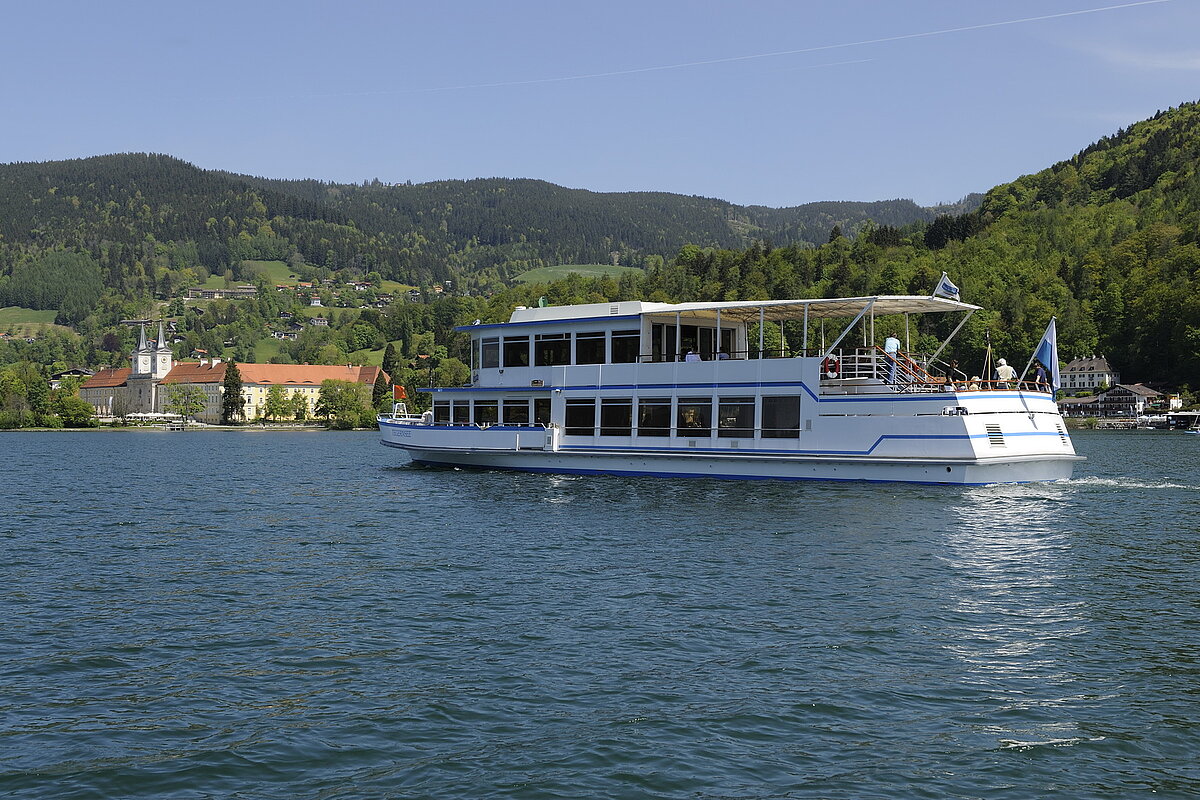
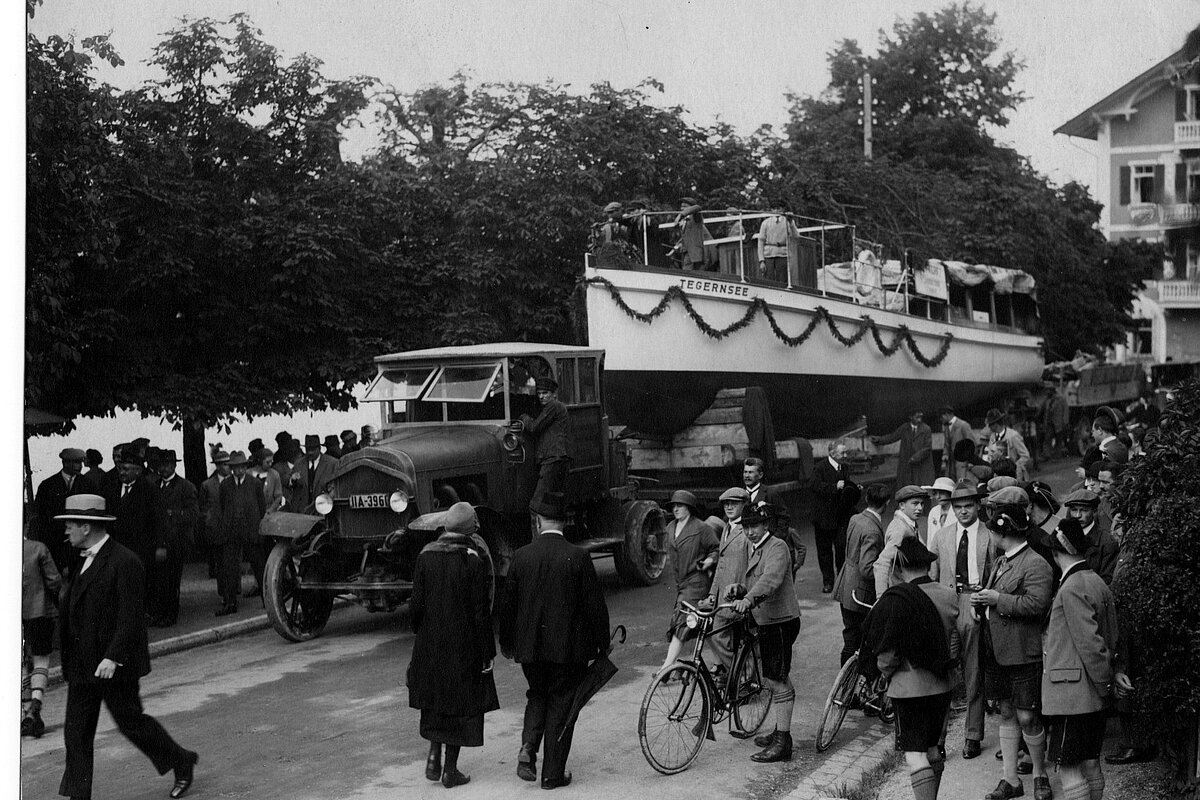
The Tegernsee branch employs around 20 people. The fleet includes five passenger ships. The largest of these are the identical sister ships ROTTACH-EGERN and TEGERNSEE. Both are 31.10 meters long and can carry 250 people each. In winter, all necessary repairs are carried out by the employees themselves in the company's own shipyard on Lake Tegernsee. This is facilitated by a modern floating dock – a floating steel structure that can be used to lift a ship completely out of the water so that the hull can also be repaired.
Schifffahrt Tegernsee operates daily from mid/late March to early November and during the Christmas holidays.
Operations manager: Stephan Herbst
Yesterday
In 1894, a fisherman was granted permission by Prince Regent Luitpold to operate a motorboat for the first time. Until World War II, there were five motorboats on the lake. During the war, three private companies joined forces to form an emergency association in order to keep operations going. However, due to fuel shortages, shipping almost came to a standstill. The Bavarian state helped out and provided two electric motorboats from Königssee. The electric boats returned to Königssee in 1951. Between 1951 and 1954, the Free State of Bavaria purchased all the boats and took over operations completely. Administration was handled by the Bavarian Administration of State-owned Palaces, Gardens and Lakes. On January 1, 1984, the four state shipping companies on Ammersee, Starnberger See, Tegernsee, and Königssee were merged to form Staatliche Seenschifffahrt, a company owned by the Free State of Bavaria. Since January 1, 1997, the company has been called Bayerische Seenschifffahrt GmbH.
Schifffahrt Starnberger See
Today
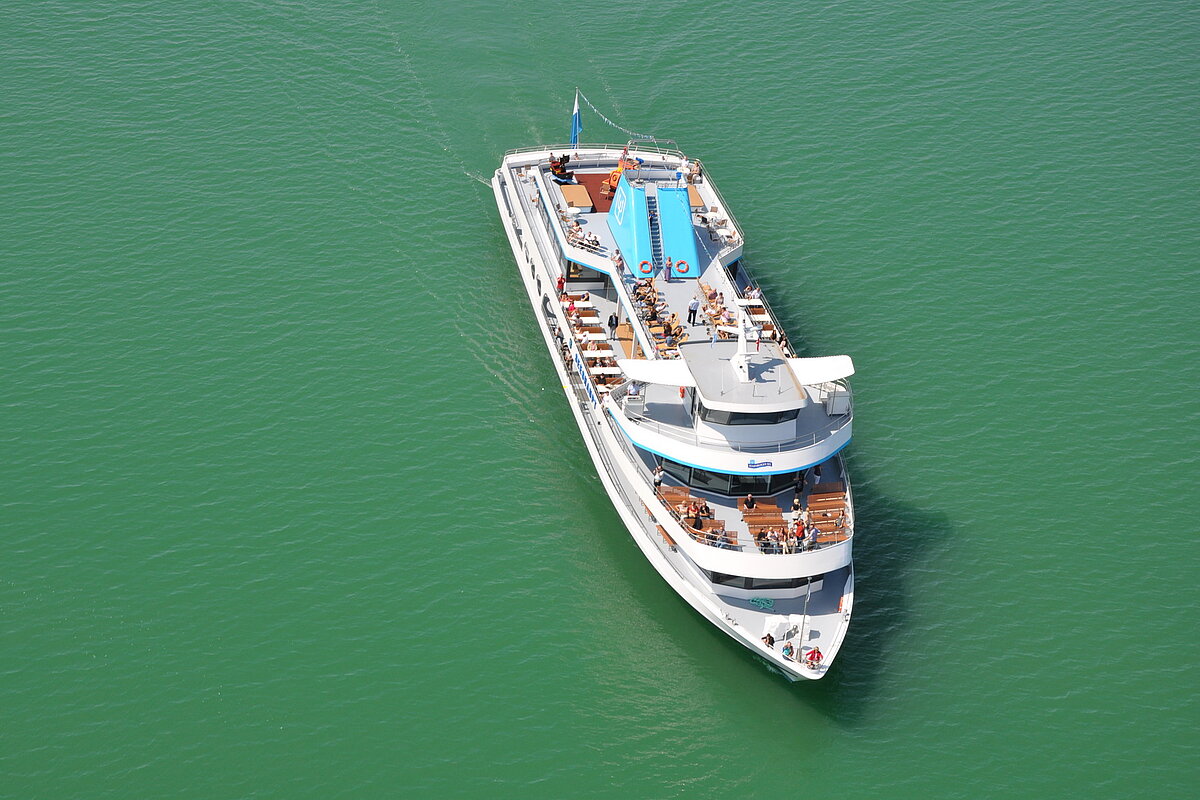
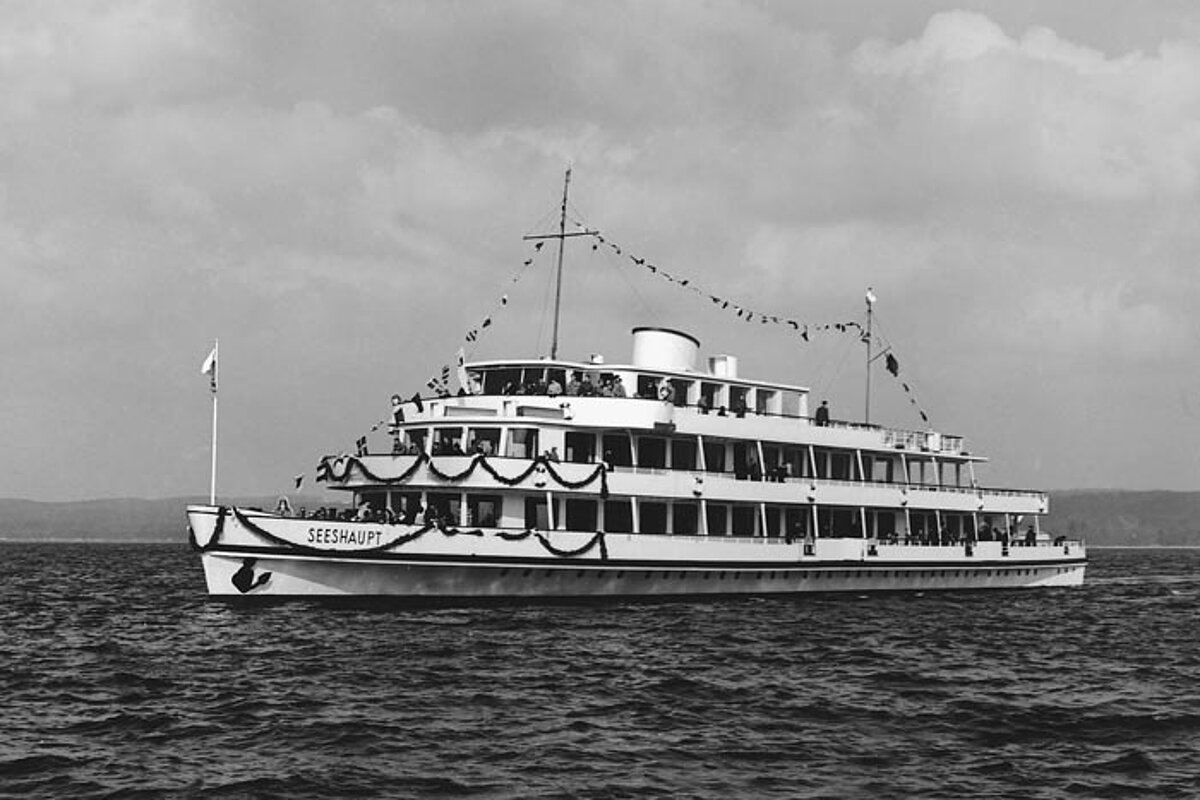
Lake Starnberg, south of Munich, has the largest ships of the Bayerische Seenschifffahrt GmbH. At 60 meters, the MS SEESHAUPT is the longest ship and can carry up to 800 passengers. The gallery catamaran STARNBERG is unique on Bavaria's lakes with its two hulls. It is 56 meters long, 15 meters wide, and also a capacity for 800 people. The electrically powered EMS BERG is 35 meters long and can accommodate 300 people – one of the largest electric ships on German inland waters. A total of five passenger ships operate on Lake Starnberg. Around 30 employees are responsible for their operation. At their home port in Starnberg, the ships can be pulled out of the water using a large slipway system to carry out repairs to the hull. In winter, all ships are repaired by the employees and prepared for the new season. Since much of the work takes place outdoors, good weather is particularly important – and the start of the season in spring is often a major challenge.
The ships operate from Easter to mid-October.
Operations manager: Matthias Leis
Yesterday
Lake Starnberg was a popular destination for the nobility and the royal court from very early on. It was close to Munich and easy to reach via the Old Post Road. Several castles were built around the lake, inviting visitors to stay. As early as 1550, Duke Albrecht V of Starnberg had craftsmen build a “frigate”. In the 17th century, Elector Ferdinand Maria created a magnificent fleet. The most famous ship was the “Bucentaur” – a magnificent vessel with room for 500 people, powered by 110 rowers and additionally equipped with sails. During celebrations on the lake, it was accompanied by up to 34 escort ships, including music, kitchen, and chamberlain ships. Due to high repair costs, Elector Max II had the “Bucentaur” dismantled in 1758. The age of steam navigation began in 1851: in the presence of King Max II, the first paddle steamer was launched in Starnberg. In 1864, a joint-stock company took over operations until the Bavarian state took over shipping on January 1, 1915. Initially, the Bavarian State Railways and later the Reichsbahn and Deutsche Bundesbahn operated the shipping service. From 1959 onwards, it was managed by the Bavarian Administration of State-owned Palaces, Gardens and Lakes. On January 1, 1984, the four shipping companies on Lake Ammersee, Lake Starnberg, Lake Tegernsee, and Lake Königssee were merged to form Staatliche Seenschifffahrt, a company owned by the Free State of Bavaria. Since January 1, 1997, the company has been called Bayerische Seenschifffahrt GmbH.
Schifffahrt Ammersee
Today
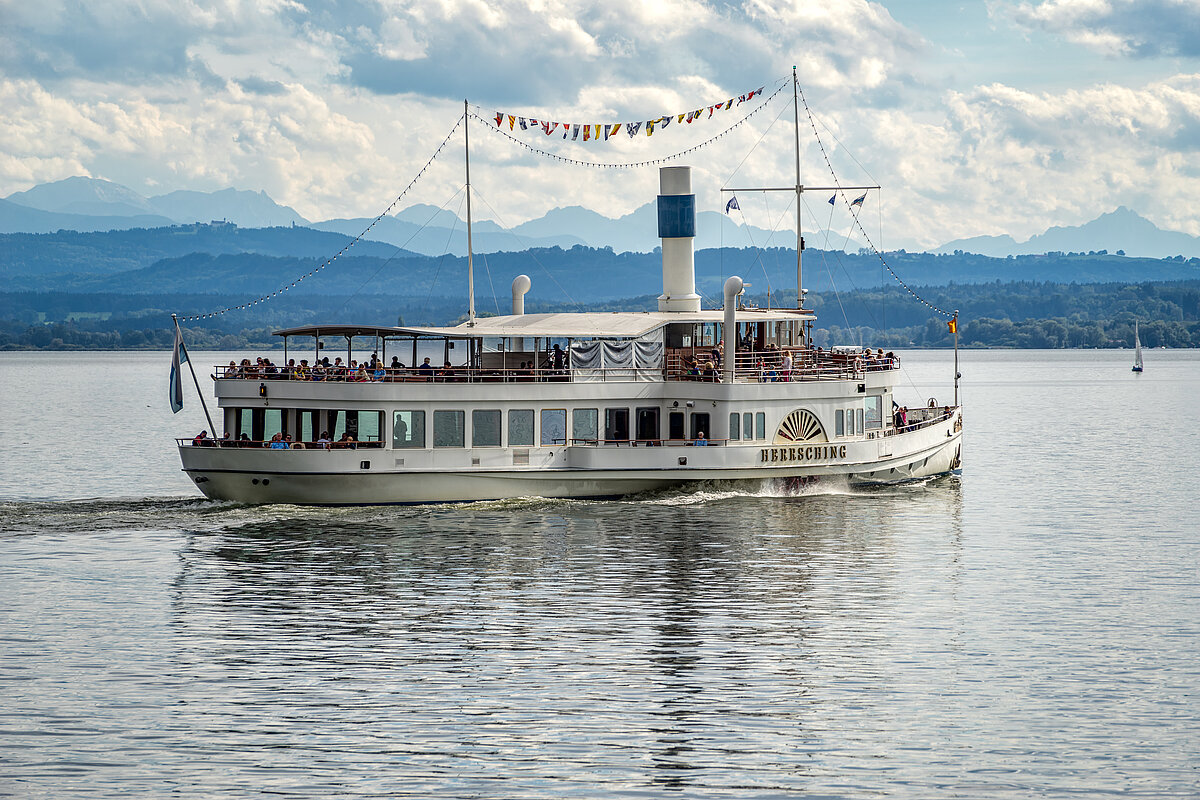
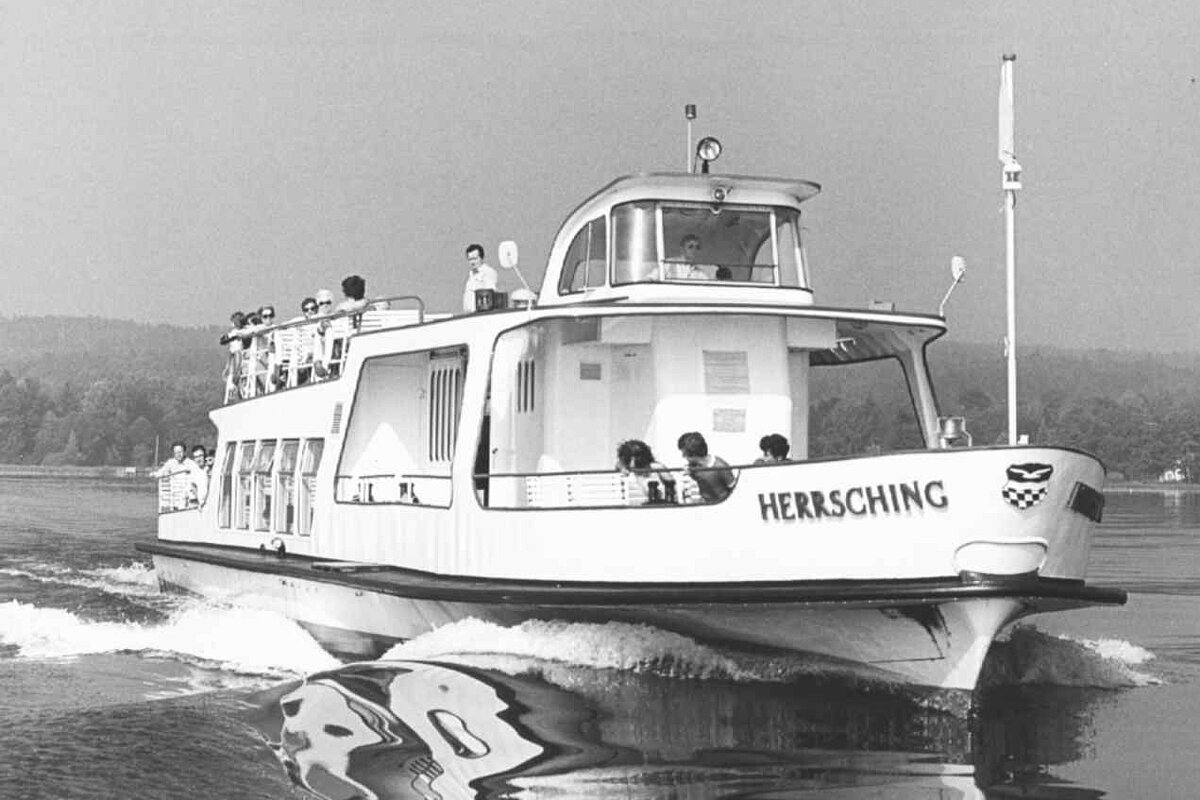
Ammersee Shipping ranks second in terms of passenger numbers among Bavaria's lakes, directly behind Königssee. Around 25 employees work in the Inning/Stegen division. The Ammersee fleet combining historical appearance with modern technology. Among the best-known ships are the two paddle steamers HERRSCHING and DIESSEN, as well as the motor ships UTTING and AUGSBURG, which were built in the style of the 1920s. A 60-meter-long dry dock is available for maintenance and repairs, where all ships are regularly inspected and serviced.
The shipping company operates from Easter to mid-October.
Operations manager: Florian Schmid
Yesterday
The history of Ammersee shipping began in 1877, when twelve citizens from Dießen commissioned the shipbuilder Ringmaier to procure a steamboat. A 12-meter-long and 2-meter-wide boat with 12 hp finally arrived from Heilbronn. It was called the “Omnibus” and could carry 20 people. Due to technical problems, the first trip took a whole three days. As tourism on Lake Ammersee was already growing rapidly at that time, the boat quickly became too small. In 1878, a joint-stock company was founded, which had a larger ship built in Zurich for 150 passengers. In 1880, Reichsrat von Maffei acquired a majority stake in this company. Because there was still no rail connection to Munich or Augsburg, a feeder service was set up on the Amper between Stegen and Grafrath with the river steamer “Maria Theresia.” In 1906, the Bavarian state bought the entire shipping business on Lake Ammersee for 110,000 guilders and handed it over to the Royal Bavarian State Railway. River shipping on the Amper was discontinued in 1939. Later, operations were managed by the Reichsbahn and then by the Bundesbahn. From 1959, Ammersee shipping belonged to the Bavarian Administration of State-owned Castles, Gardens and Lakes. On January 1, 1984, the four shipping companies on Lake Ammersee, Lake Starnberg, Lake Tegernsee, and Lake Königssee were merged to form Staatliche Seenschifffahrt – a company owned by the Free State of Bavaria. Since January 1, 1997, the company has been known as Bayerische Seenschifffahrt GmbH.