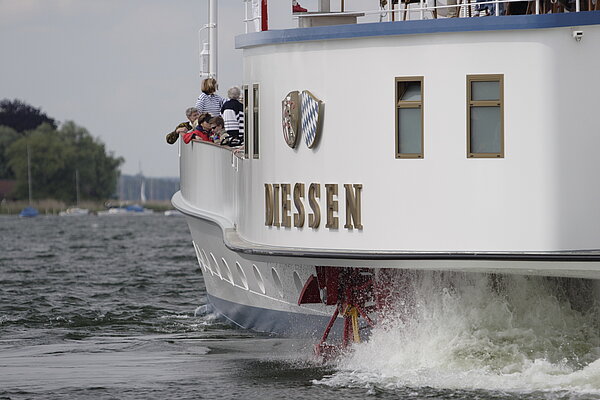
Two paddle steamers (HERRSCHING and DIESSEN) are in service at Schifffahrt Ammersee. The official designation for this type of ship is RMS (for paddle steamer, e.g., RMS DIESSEN). The other ships are designated MS (for motor ship, e.g., MS UTTING) or, on Königssee, EMB (for electric motor boat, e.g., EMB RAMSAU). The ship designation “MS” is familiar to our passengers—perhaps thanks to the well-known television series Traumschiff. However, many people find the terms “RMS” and ‘radmotorschiff’ difficult to understand. We have noticed that our passengers usually refer to “paddle steamers,” especially on the phone, but also on board. Journalists also like to use the term “paddle steamer” or simply “steamer” in their articles. We found this ship designation appealing and easy for everyone to understand. That is why we refer to paddle steamers as “paddle steamers.” The “paddle steamers” HERRSCHING and DIESSEN are side-wheel paddle steamers, which means that they are not propelled by a propeller at the stern, but by two wheels mounted on the sides. This is a historical design that is hardly used today. However, our two “paddle steamers” are not powered by steam. The side wheels are driven by modern, low-emission diesel engines and not by a steam engine. Although there are only a few ships left today that are actually powered by steam, the term “steamer” has remained in common usage and is used for a wide variety of ship types. So when we refer to “paddle steamers” or ‘steamers’ in our texts, we do not intend to mislead anyone or upgrade a diesel ship to a genuine “steamer.” We use the term simply because it is widespread, easy to understand, and appealing.